

Constitutional Homeopathy: Why Two People with the Same Symptoms May Get Different Remedies
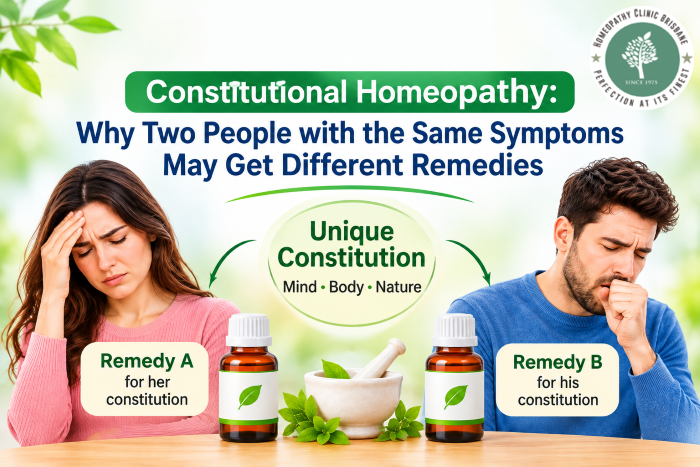
Constitutional Homeopathy: Why Two People with the Same Symptoms May Get Different Remedies
Imagine two people walk into a clinic with the same complaint: recurring headaches. In a conventional setting, they might both be offered the same type of treatment. In a homeopathic consultation, however, they may leave with two completely different remedies.
This surprises many first-time patients. At Homeopathy Clinic Brisbane, it is one of the most common questions we hear: “If we have the same symptoms, why would I get a different remedy?” The answer lies in an approach called constitutional homeopathy.
What Is Constitutional Homeopathy?
Constitutional homeopathy is a way of practising homeopathy that looks at the whole person, not just the main complaint. Your “constitution” refers to your overall makeup: your physical characteristics, emotional tendencies, energy levels, lifestyle, and the way you respond to the world around you.
In this approach, a headache is not just a headache. It is one piece of a larger picture that is unique to you. The aim of choosing homeopathy remedies is to match that whole picture rather than a single symptom.
The Principle of Individualisation
Homeopathy is built on the idea of individualisation. This means that treatment is tailored to the individual rather than to a disease label. Two people with the same diagnosis may experience that condition in very different ways, and homeopathic practitioners pay close attention to those differences.
For example, consider two people with a persistent cough:
- Person A has a dry, tickling cough that is worse at night, feels restless and anxious, and is constantly thirsty for cold drinks.
- Person B has a loose, rattling cough that is worse in the morning, feels tired and withdrawn, and prefers to be warm and left alone.
Although the main symptom is the same, the surrounding details are very different. In homeopathic thinking, these details guide the choice of remedy, which is why Person A and Person B could be given different homeopathy treatment plans.
What Does a Practitioner Look At?
A constitutional consultation is typically longer and more detailed than many people expect. Your homeopath will usually ask about:
- Your main complaint: when it started, what triggers it, and what makes it better or worse
- Physical characteristics: appetite, thirst, sleep patterns, temperature preferences (do you feel the cold or the heat more?), and energy levels
- Emotional and mental state: how you handle stress, whether you tend toward worry, irritability, sadness, or restlessness
- Personal and family health history: past illnesses, recurring patterns, and conditions that run in the family
- Lifestyle factors: diet, work, relationships, and daily routines
- Reactions and preferences: how you respond to weather, food, company, or time of day
It may feel unusual to be asked about your food cravings or your dreams when you came in for a skin complaint. In constitutional homeopathy, these details help build a complete picture of you as a person.
Acute vs Constitutional Prescribing
It helps to understand the difference between two common types of homeopathic prescribing:
Acute prescribing focuses on short-term, self-limiting problems such as a minor cold, a mild sprain, or a short bout of indigestion. The remedy is chosen based mainly on the current symptoms.
Constitutional prescribing looks at longer-term or recurring concerns and considers the whole person. This is often used for chronic patterns such as ongoing allergies, recurring digestive issues, or persistent sleep difficulties.
Both approaches are used in practice, and your practitioner will advise which is most suitable for your situation.
Why the Same Remedy Doesn’t Work for Everyone
One of the reasons people feel disappointed with general, over-the-counter products is that they are chosen based on a single symptom. Homeopathic practitioners would say this is a bit like buying a pair of shoes based on only one measurement. It may work for some people, but it is unlikely to fit everyone.
By taking a detailed case history, a practitioner aims to select, from the wide range of available homeopathy remedies, the one that best matches your particular pattern.
What to Expect During Constitutional Treatment
If you decide to explore constitutional homeopathy treatment, here is what the process generally looks like:
- An in-depth first consultation. This can take an hour or more, as your practitioner gets to know you.
- Remedy selection. Based on your case, a remedy and potency are chosen.
- Follow-up appointments. These allow your practitioner to review how you are feeling, note any changes, and adjust the plan if needed.
- Patience. Constitutional care is typically a gradual process rather than a quick fix, particularly for long-standing concerns.
If you are unable to attend in person, many people also choose an online consultation, which allows the same detailed case-taking from the comfort of home.
An Important Note
Homeopathy is a complementary approach and is not a substitute for professional medical care. Scientific evidence for homeopathy is limited, and individual experiences vary. Please continue to see your GP or specialist for diagnosis and ongoing care, tell them about any complementary treatments you are using, and never stop or change prescribed medication without medical advice. If you experience severe or sudden symptoms, seek medical attention immediately.
Is Constitutional Homeopathy Right for You?
If you value a personalised approach and are comfortable sharing details about your health, habits, and emotions, a constitutional consultation may be worth exploring. It is a different way of looking at health, one that treats you as an individual rather than a set of symptoms.
At Homeopathy Clinic Brisbane, our practitioners take the time to listen and understand your story before recommending any homeopathy treatment. Whether you are visiting us at our West End clinic or connecting via telehealth, we are here to answer your questions.
Ready to book a consultation? Contact Homeopathy Clinic Brisbane today to arrange an appointment and find out whether constitutional homeopathy is right for you.